


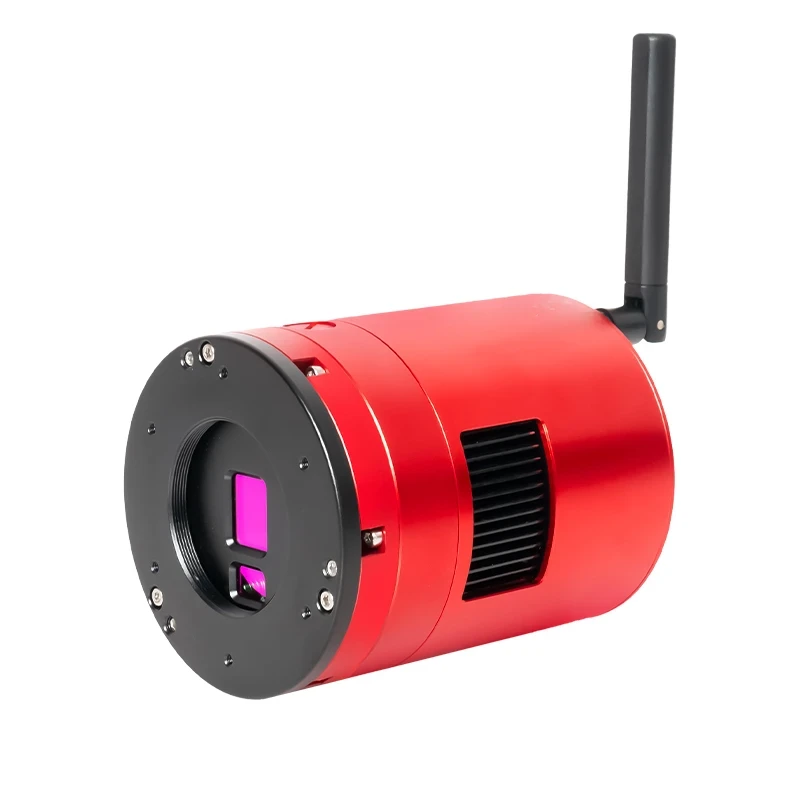

ZWO ASI 585 MM-Air Monochrome Cooled Camera – an integrated solution for astrophotography.
The ZWO ASI 585 MM-Air monochrome cooled camera is an exceptionally versatile cooled monochrome camera, making it an excellent choice for both planetary and deep-sky imaging. In addition to its outstanding performance, one of its greatest advantages is that it offers a complete astrophotography system in a single compact housing.
What makes it truly special?
The device combines three key components:
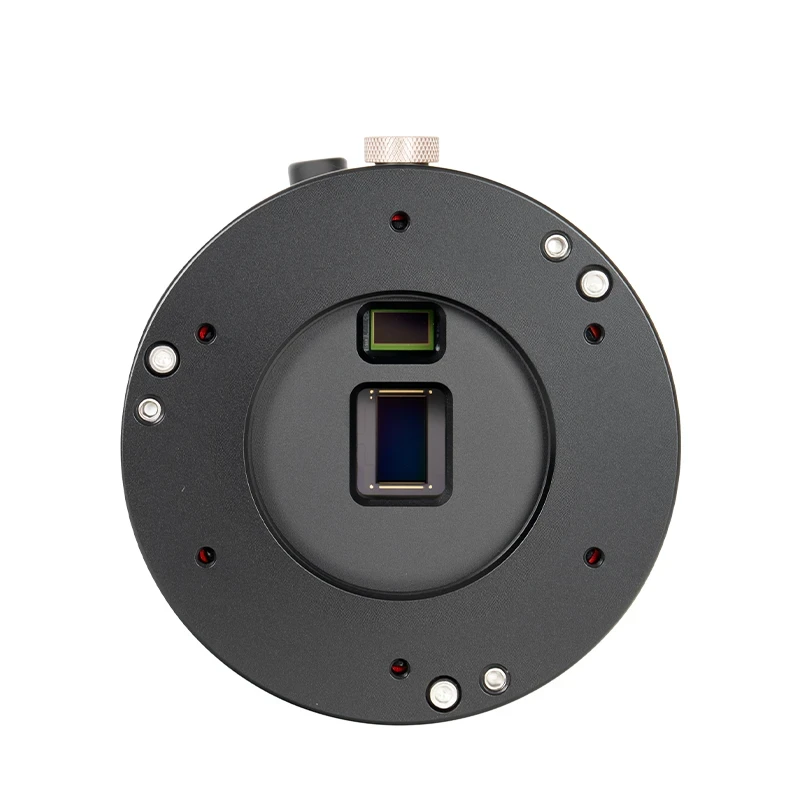
- Main imaging sensor for high-resolution captures
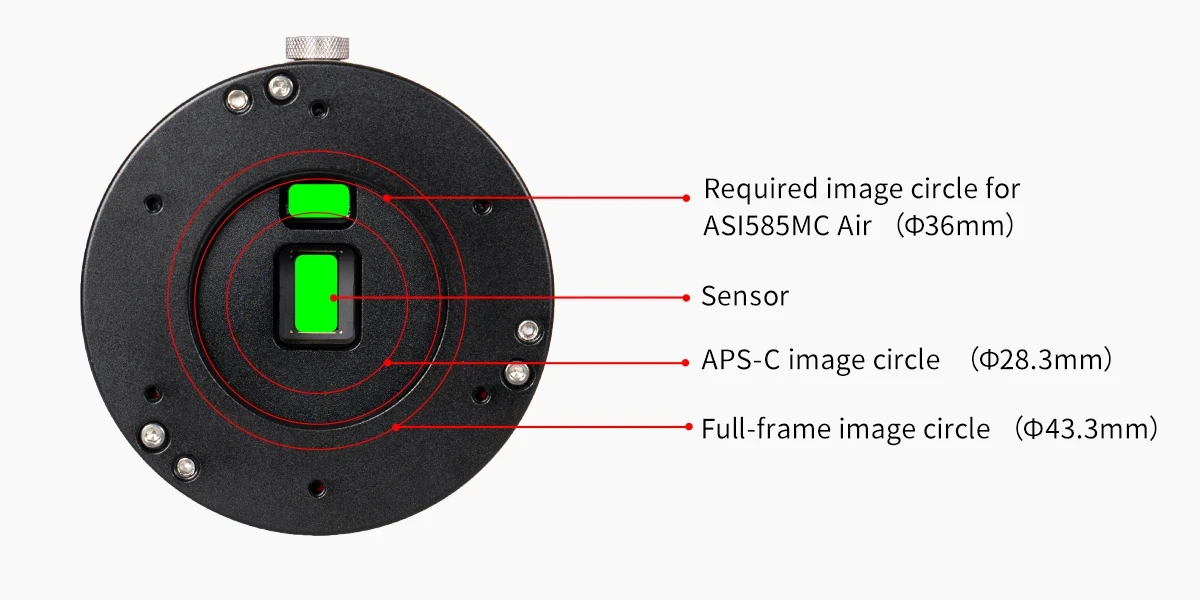
- Integrated guide camera sensor that uses the optical path of the main telescope – eliminating the need for a separate guide scope
- Built-in ASIAIR controller for image capture, guiding and stacking
This integration significantly simplifies system setup and operation.
Modern sensor, outstanding image quality
At the heart of the camera is a SONY IMX585 back-illuminated sensor offering:
- 8-megapixel resolution (3840 × 2160)
- 2.9 µm pixel size
- 6.26 × 11.13 mm sensor size
The STARVIS 2 technology provides high sensitivity and low noise, making it an ideal choice even in low-light conditions.
Also ideal for planetary and lunar imaging, as well as Electronically Assisted Astronomy (EAA).
The 12-bit output enables the capture of 4096 tonal levels, delivering 10.8 fps at 1920 x 1080 resolution, which is useful for recording planetary videos. Thanks to the small pixel size, additional focal length extension is often unnecessary.
Efficient cooling and low noise
The built-in Peltier cooling can reduce the sensor temperature by up to 35°C below ambient temperature, which is especially important for long-exposure deep-sky imaging.
HCG (High Conversion Gain) mode further reduces read noise even at high gain settings while preserving a wide dynamic range.
Flexible operation
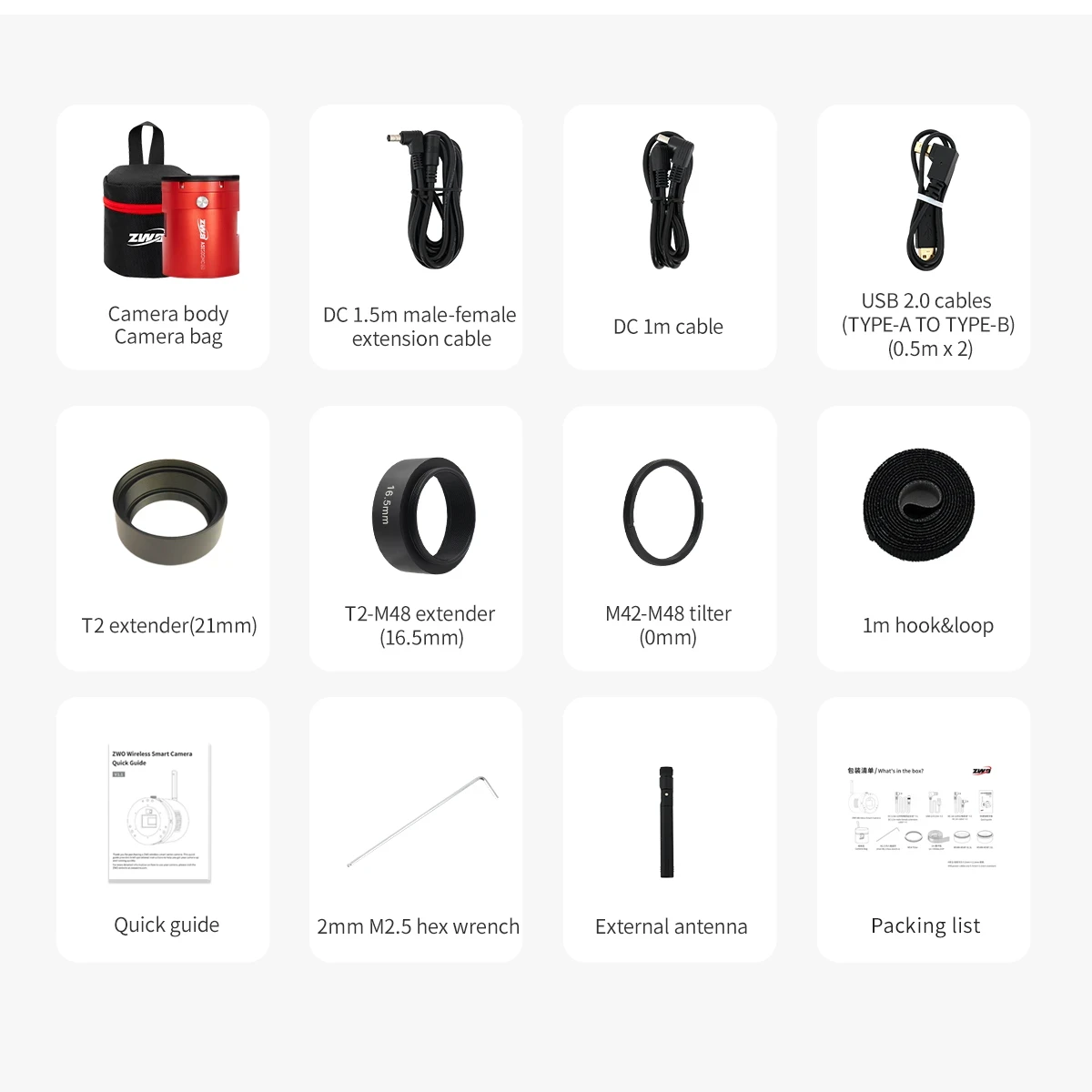
- T2 connection, with adapters for 1.25" and 2" focusers
- 256 GB storage
- 2 GB memory buffer
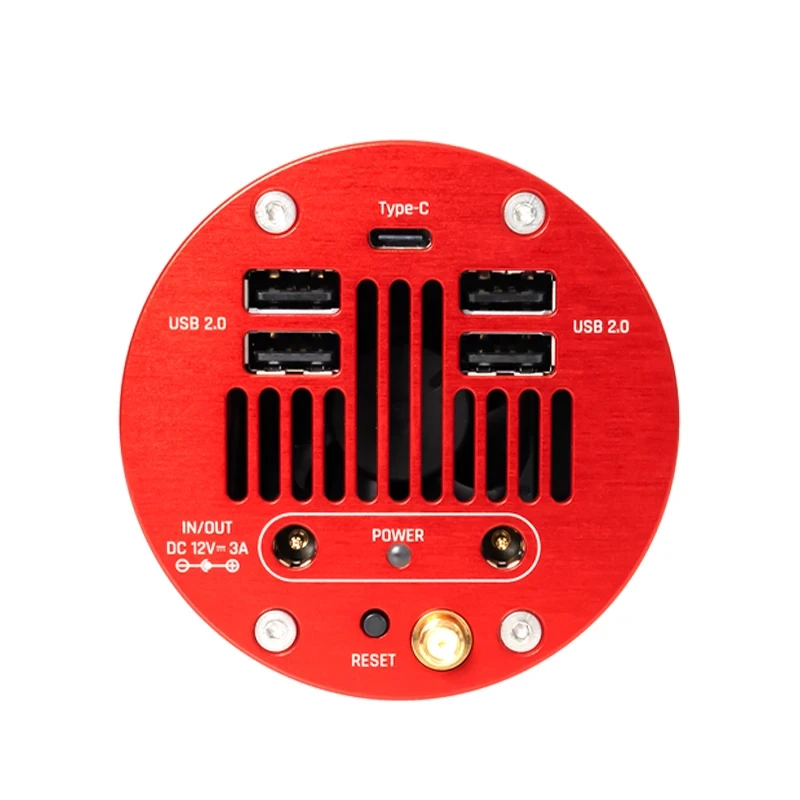
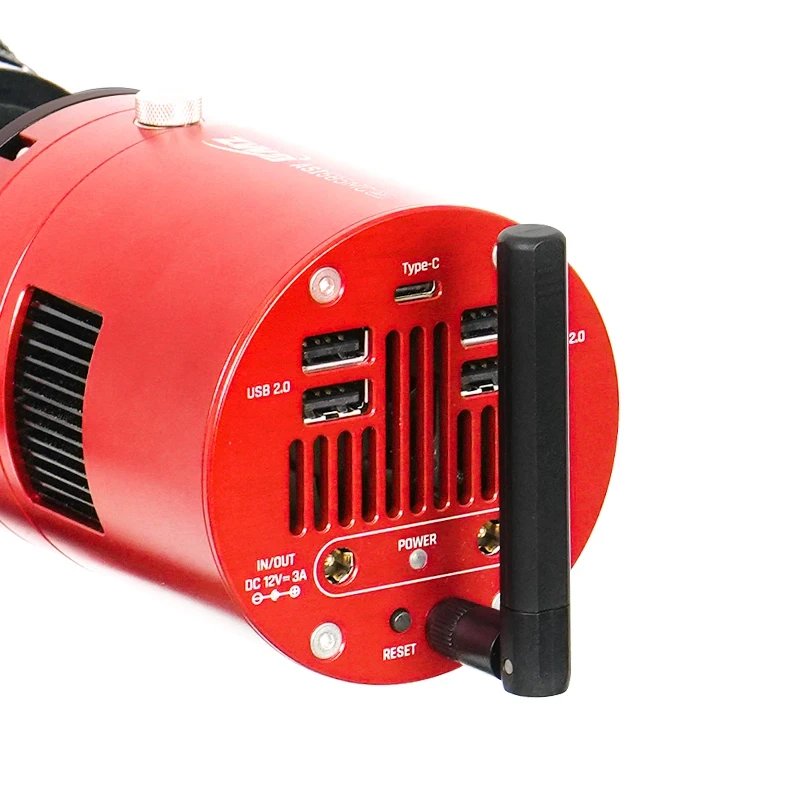
- 4 × USB 2.0 + 1 × USB-C ports
- 12V power supply (minimum 3A recommended)
Important: the camera transmits the UV/IR range without filtering, providing excellent sensitivity at these wavelengths as well.
Important note on using the guide camera:
The manufacturer recommends using optics that provide a full-frame (or larger) image circle. With an APS-C-sized image circle, only part of the light cone reaches the integrated guide sensor, which may reduce guiding accuracy.


