


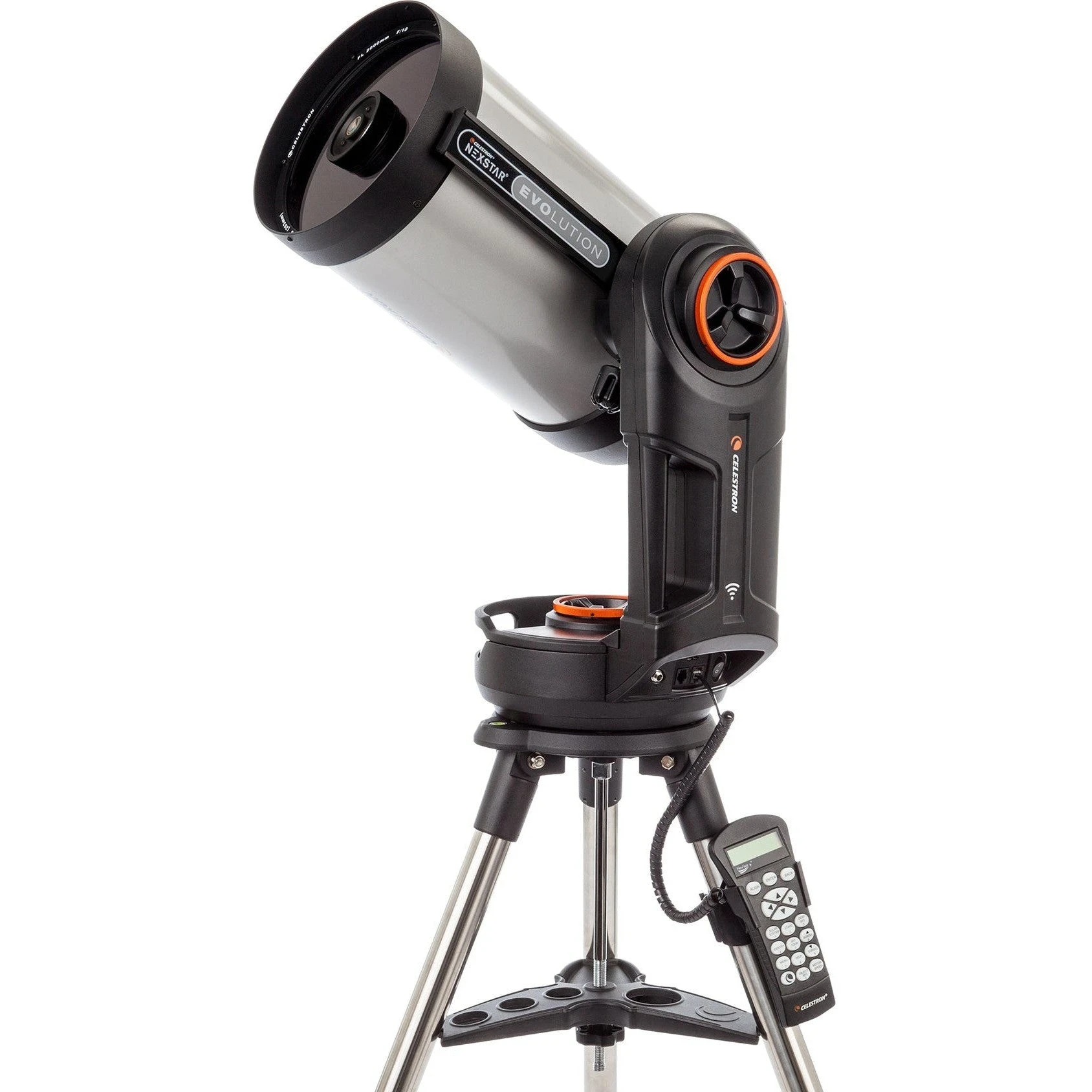

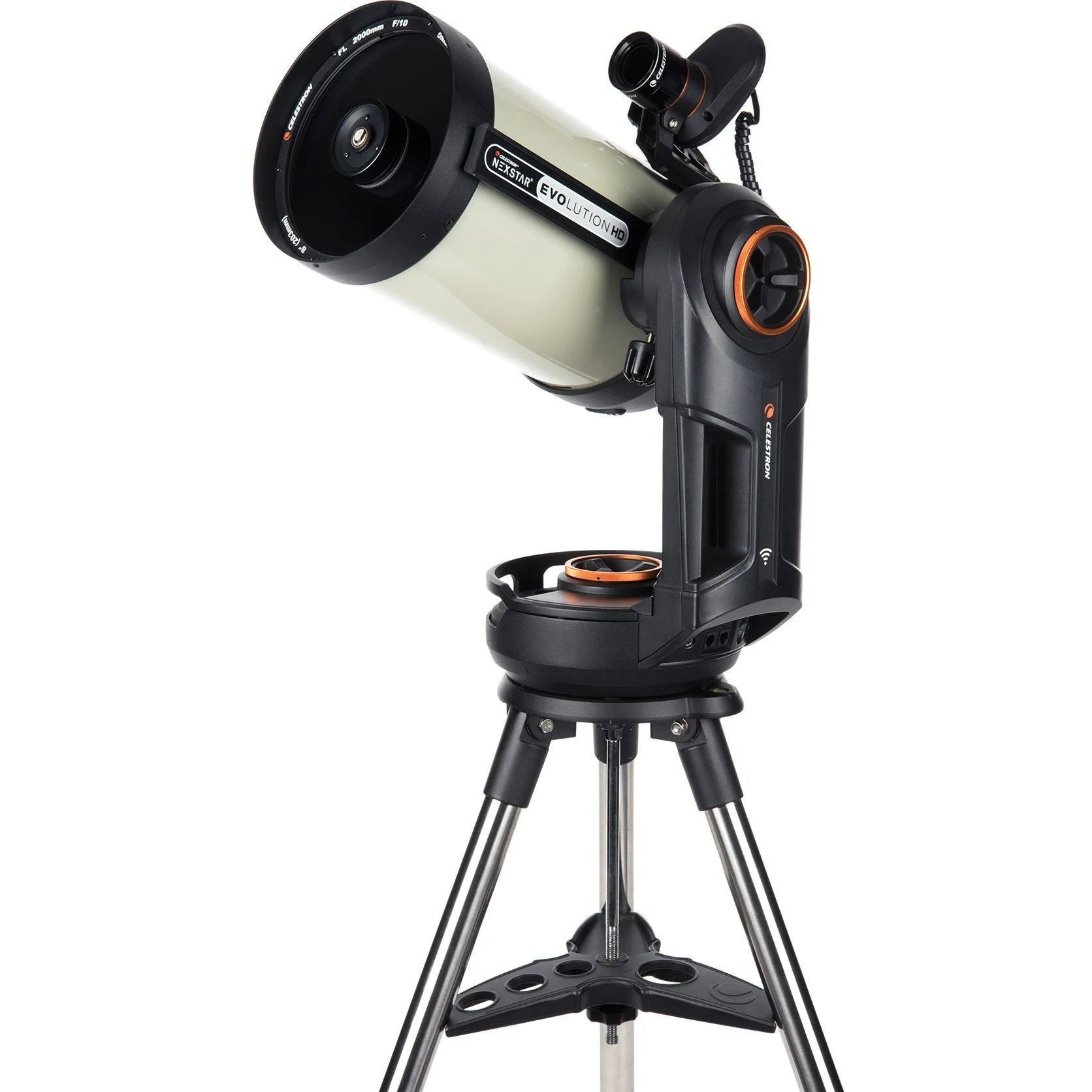
"The most user-friendly telescope ever" – this is how the Celestron NexStar Evolution series can be described, a significantly upgraded version of the NexStar SE telescopes that have deservedly become popular overseas. Maximum portability and easy, convenient operation were the key considerations behind its design. The largest model in the series is the legendary 235 mm Schmidt-Cassegrain telescope, which provides a better-corrected field of view than other SC optical tubes.
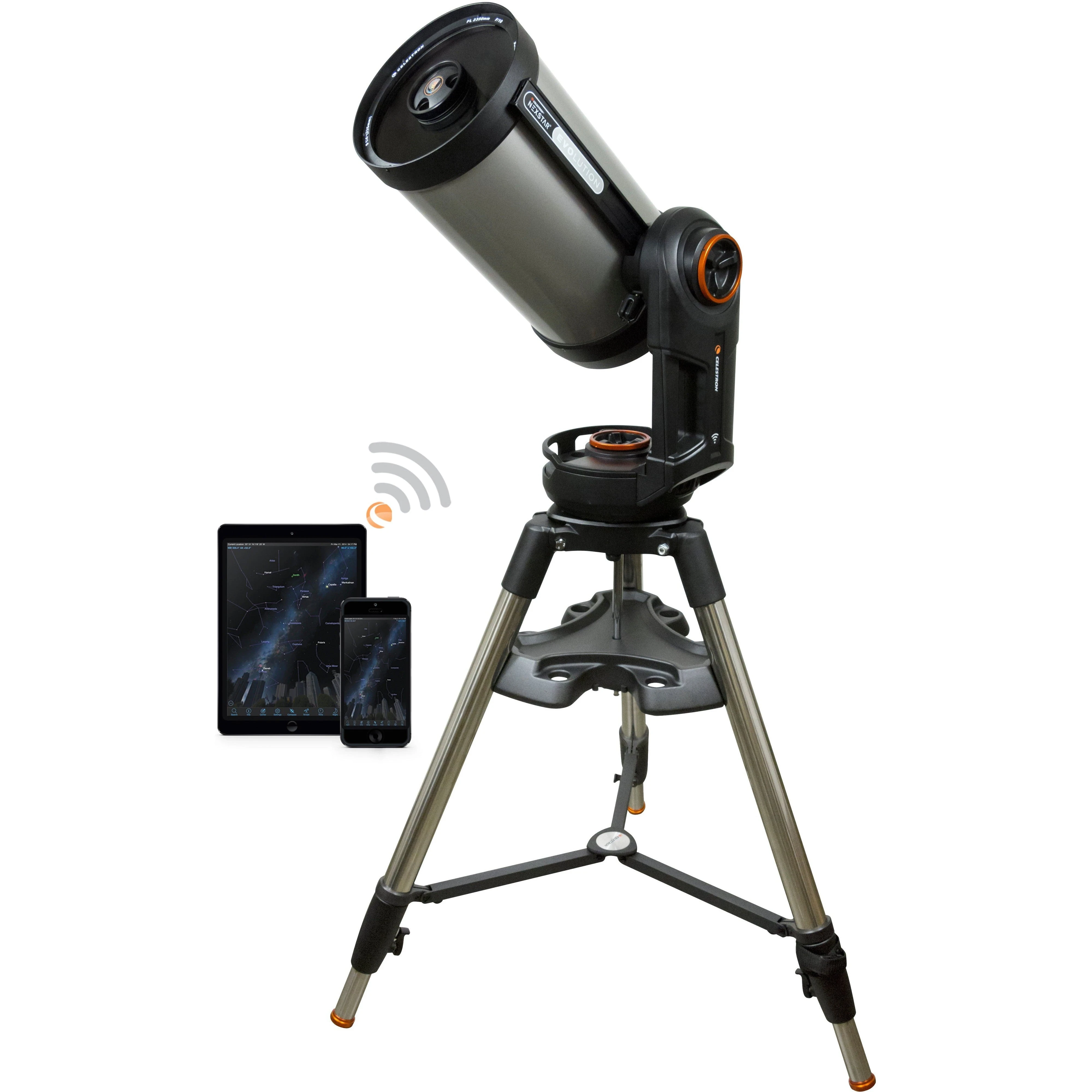
The Evolution series is the first commercial Schmidt-Cassegrain telescope to feature a built-in Wi-Fi adapter. There is no longer any need for a wired hand controller – although one is naturally included as standard. Download Celestron's own free planetarium app to your Android or iOS smart device and complete the GoTo alignment in just a few minutes using the app's integrated SkyAlign technology. This is an especially useful feature for beginners, as there is no need to know the names or positions of stars: simply align the mount with three bright stars. Once this is done, you can select objects on the touchscreen, and the Evolution will automatically slew to them. The NexStar Evolution database contains data for nearly 40,000 objects and can point the telescope at any of them.
A major advancement is that, instead of replaceable batteries or an external power source, the engineers opted for a built-in power supply. Thanks to the rechargeable lithium-ion battery, you can observe continuously for up to 10 hours. In addition, the system automatically switches to power-saving mode when the battery level is low. Further benefits of the Evolution series include manual dovetail clamps, allowing the optical tube to be moved manually, and two eyepiece trays, with space for a total of 7 eyepieces. The company's proprietary StarBright XLT coating significantly improves the telescope's light-gathering capability and enhances image contrast.
Thanks to the upgraded motors and control system, celestial object tracking is now accurate enough to capture images of bright deep-sky objects, such as the Orion Nebula, even in alt-azimuth mode with a DSLR camera. The separately available Pro HD equatorial wedge also enables long-exposure astrophotography.
The standard package includes a StarPointer finder scope, two Plössl eyepieces (40 mm and 13 mm), and a 1.25-inch mirror diagonal.


