


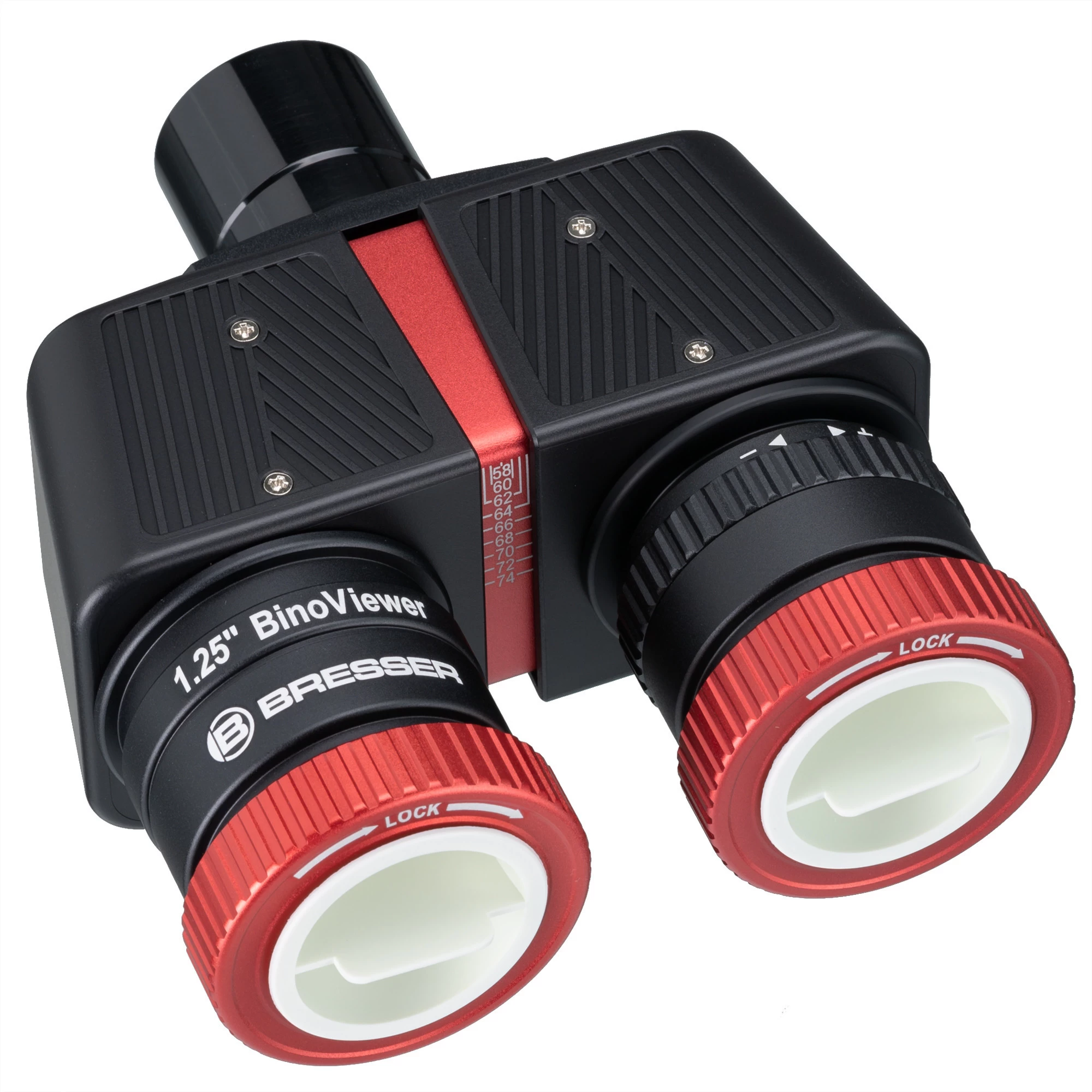

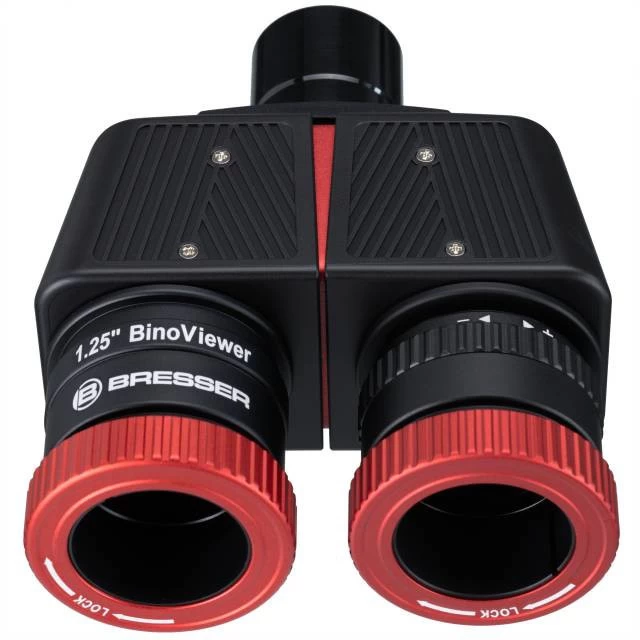
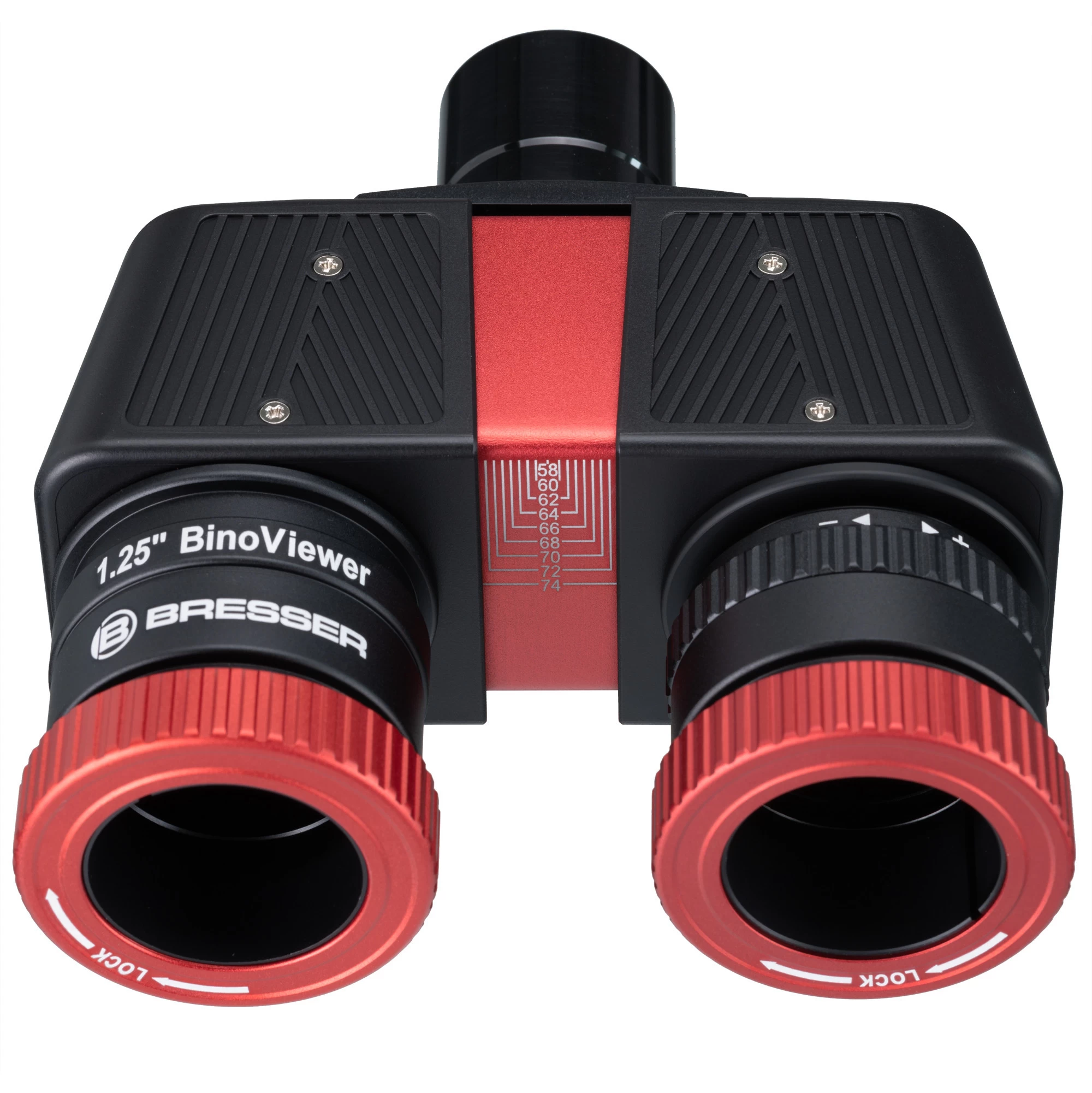
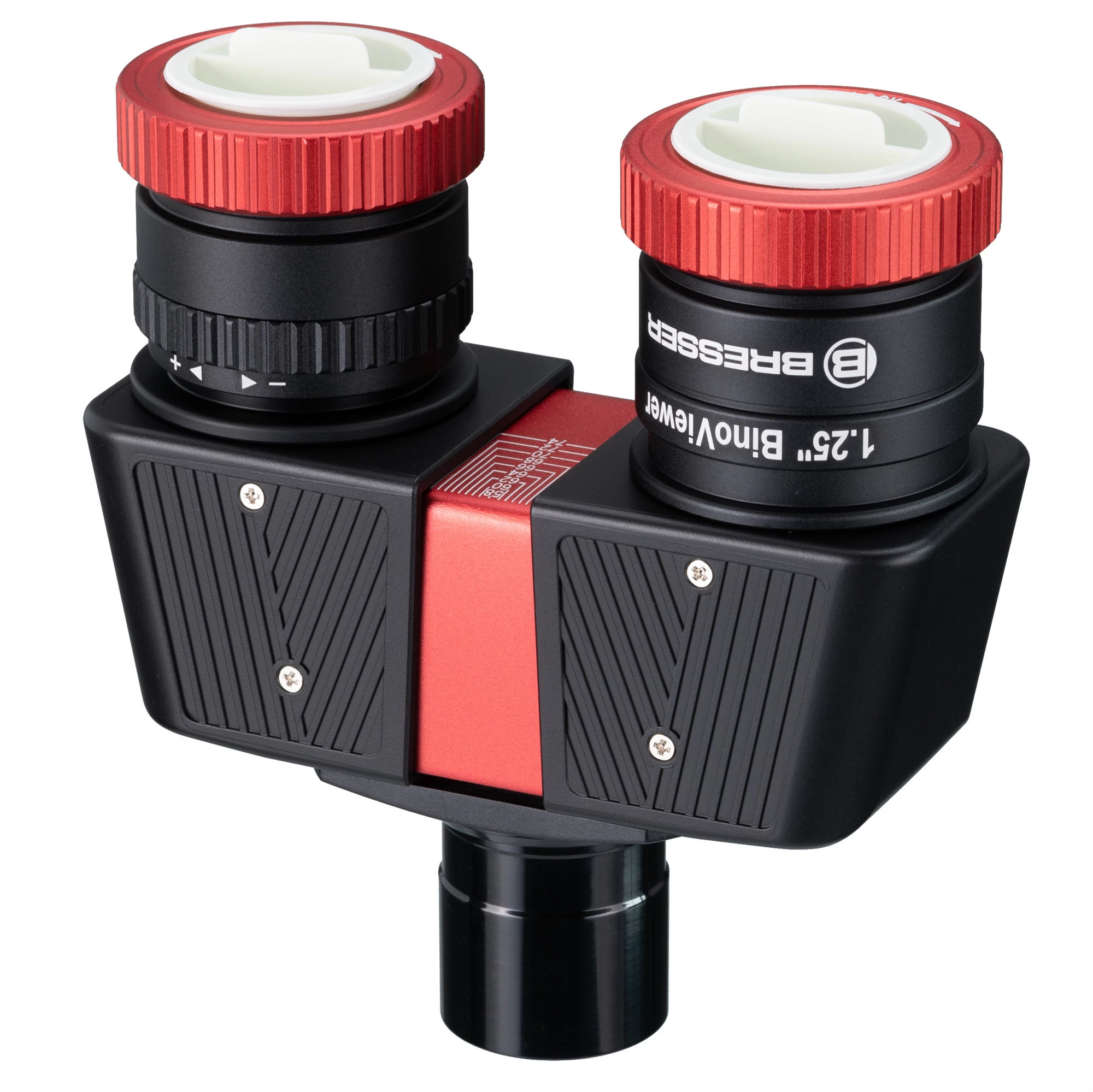
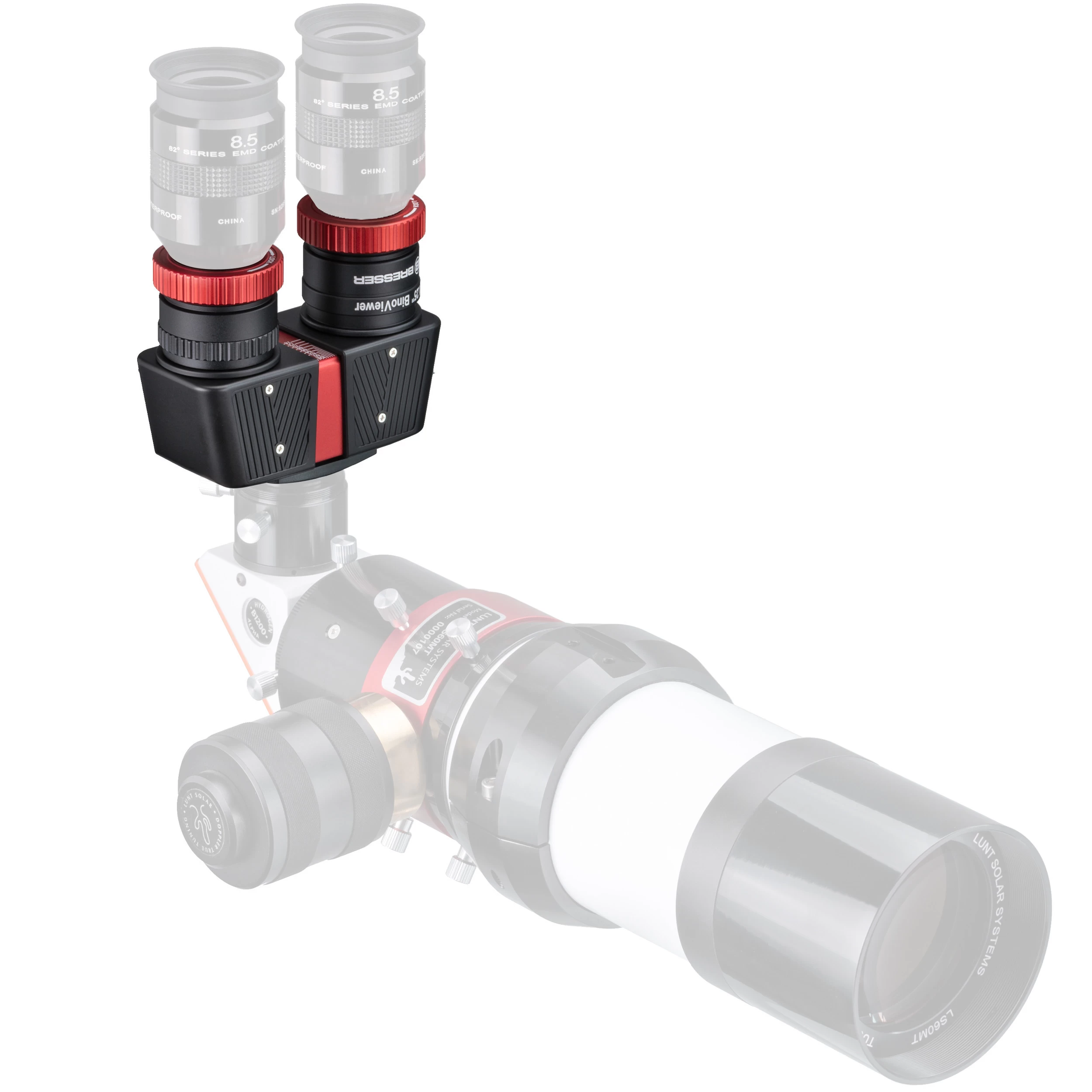
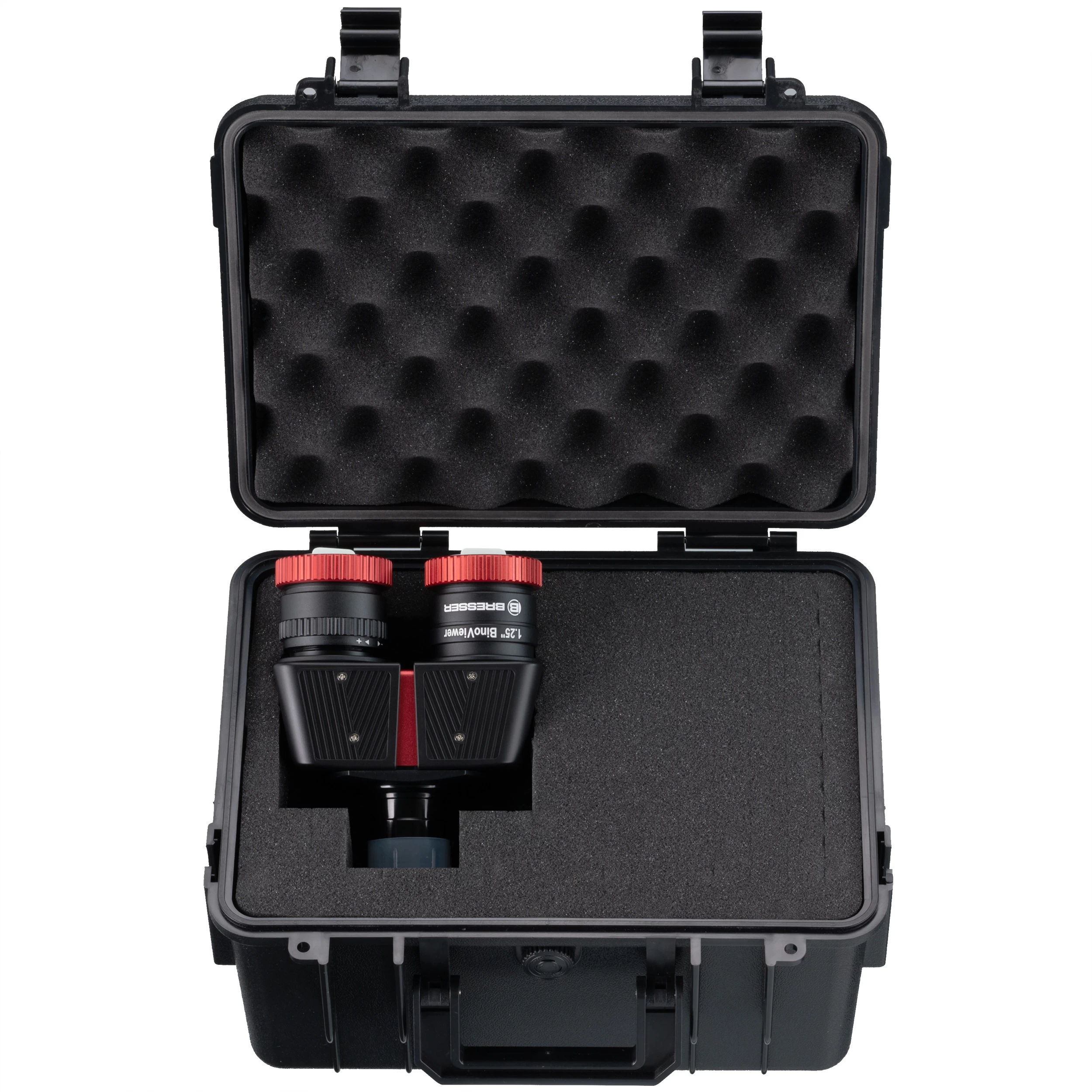
With the new Bresser Deluxe binoviewer, you can enjoy a binocular, three-dimensional view through almost any telescope, including Newtonian telescopes, as no additional optical path corrector is required.
How does it work?
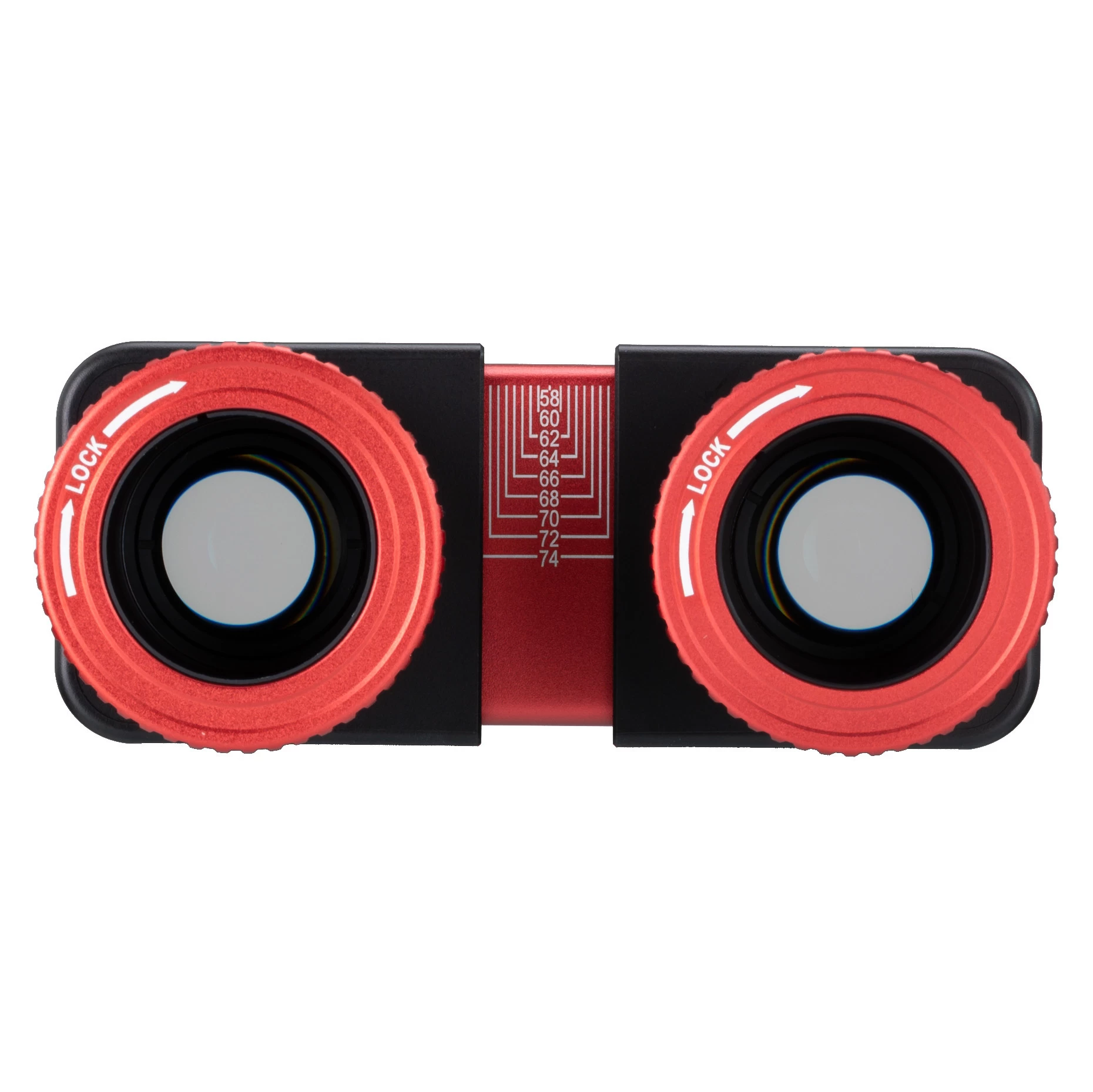
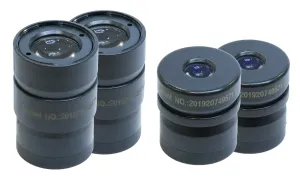
Unlike more affordable models, the Bresser Deluxe binoviewer features a complex system of mirrors and lenses that splits the incoming light into two beams with minimal loss and precise balance, then directs them to the focusers. Although each eye receives only half the amount of light, the brain can combine the images seen by the left and right eyes. It is well known that when using both eyes simultaneously, the magnification appears greater and more detail can be observed on the target object. In addition, observing with both eyes is less tiring than squinting through one eye. The interpupillary distance can be adjusted between 58 and 74 mm to suit individual requirements. It requires two identical 1.25" eyepieces. A special feature is that the eyepieces are secured with compression rings rather than screws, ensuring that both eyepieces are held centrally without pushing them off the optical axis. Higher-quality eyepieces are strongly recommended to make the most of the binoviewer’s optical performance.
Special feature
The unique internal prism system of the Bresser Deluxe binoviewer rotates the image by 180 degrees. In practice, this fully corrects the inherently inverted image of Newtonian telescopes, producing an upright, laterally correct view and making these instruments ideally suited for daytime nature observation as well. When connected directly in a straight-through configuration to refractors and catadioptric systems, the binoviewer also provides an upright image, eliminating the need for a separate image-correcting Amici prism. It is important to note, however, that when used with a conventional mirror diagonal or star diagonal prism on these telescopes, the system is no longer suitable for nature observation because the image becomes inverted again. In addition, the binoviewer operates without requiring additional optical path length (0 mm backfocus), allowing any type of telescope to reach focus immediately without a focal length-extending corrector.
Materials
Aside from the binoviewer’s external plastic housing, the manufacturer uses only metal and glass components. Bresser selected high-quality lanthanum glass manufactured by the Japanese Ohara company for the mirrors. Harmful reflections are eliminated by multiple anti-reflective coatings on all glass surfaces, while light transmission can reach 99% thanks to the dielectric coatings. This results in an even brighter, higher-contrast image.
Unlike many other products, the Bresser Deluxe binoviewer does not require additional optical path length, so no optical path corrector is needed. Therefore, the magnification achieved with the eyepieces remains unchanged, while the wide-field viewing experience is retained. The binoviewer can be used without a corrector with any telescope that produces an image with 1.25" eyepieces; the only restriction is that the eyepiece’s external diameter must not exceed 50 mm.
The Bresser Deluxe binoviewer is primarily recommended for observing the Moon, planets, the Sun with a suitable filter, and brighter deep-sky objects, but it also offers an outstanding viewing experience for daytime nature observers.