


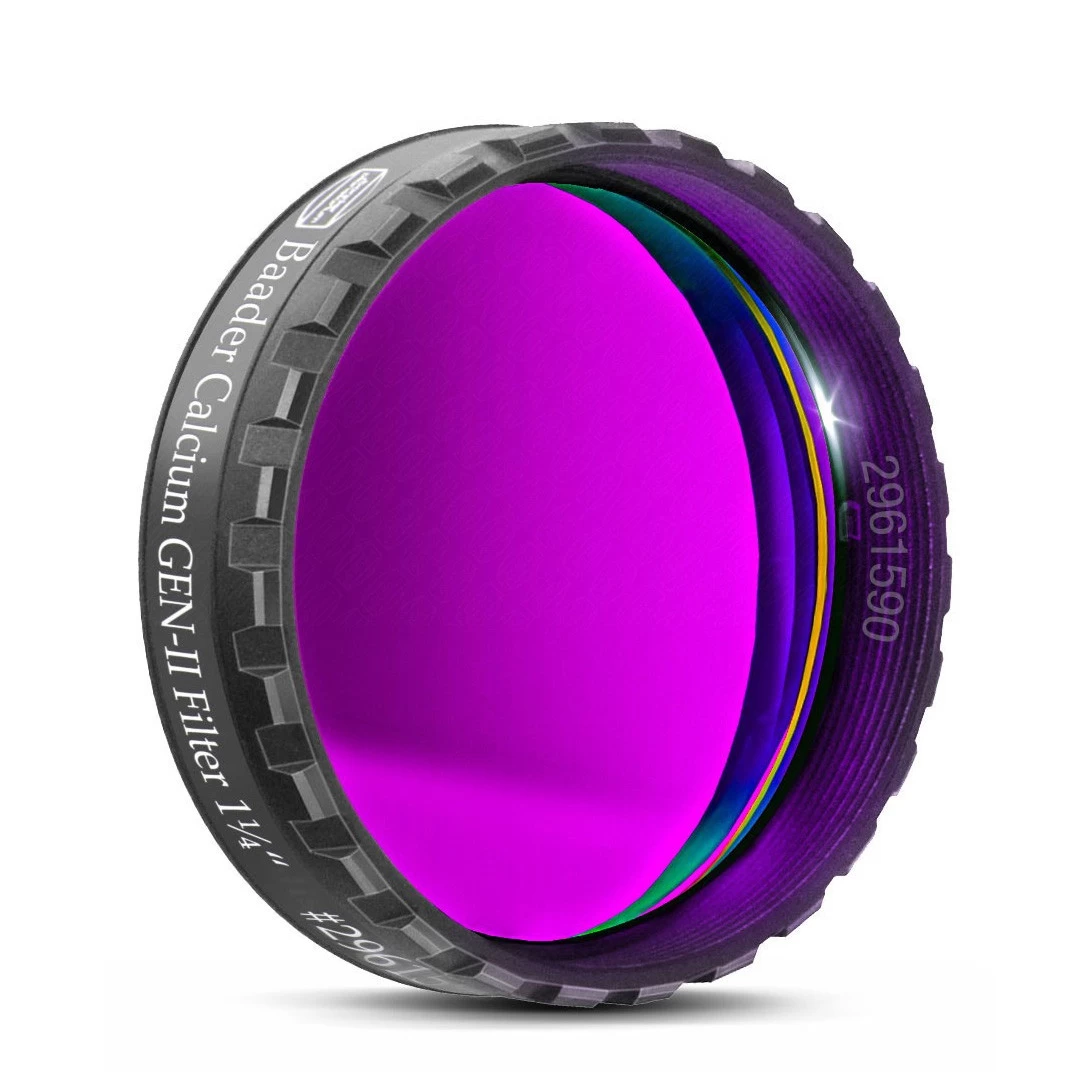
The Baader Calcium Gen-II Line Filter is a new-generation specialised calcium astrophotography filter that allows exceptional-resolution, high-contrast imaging of surface details on our Sun, including granulation, flares and sunspots.
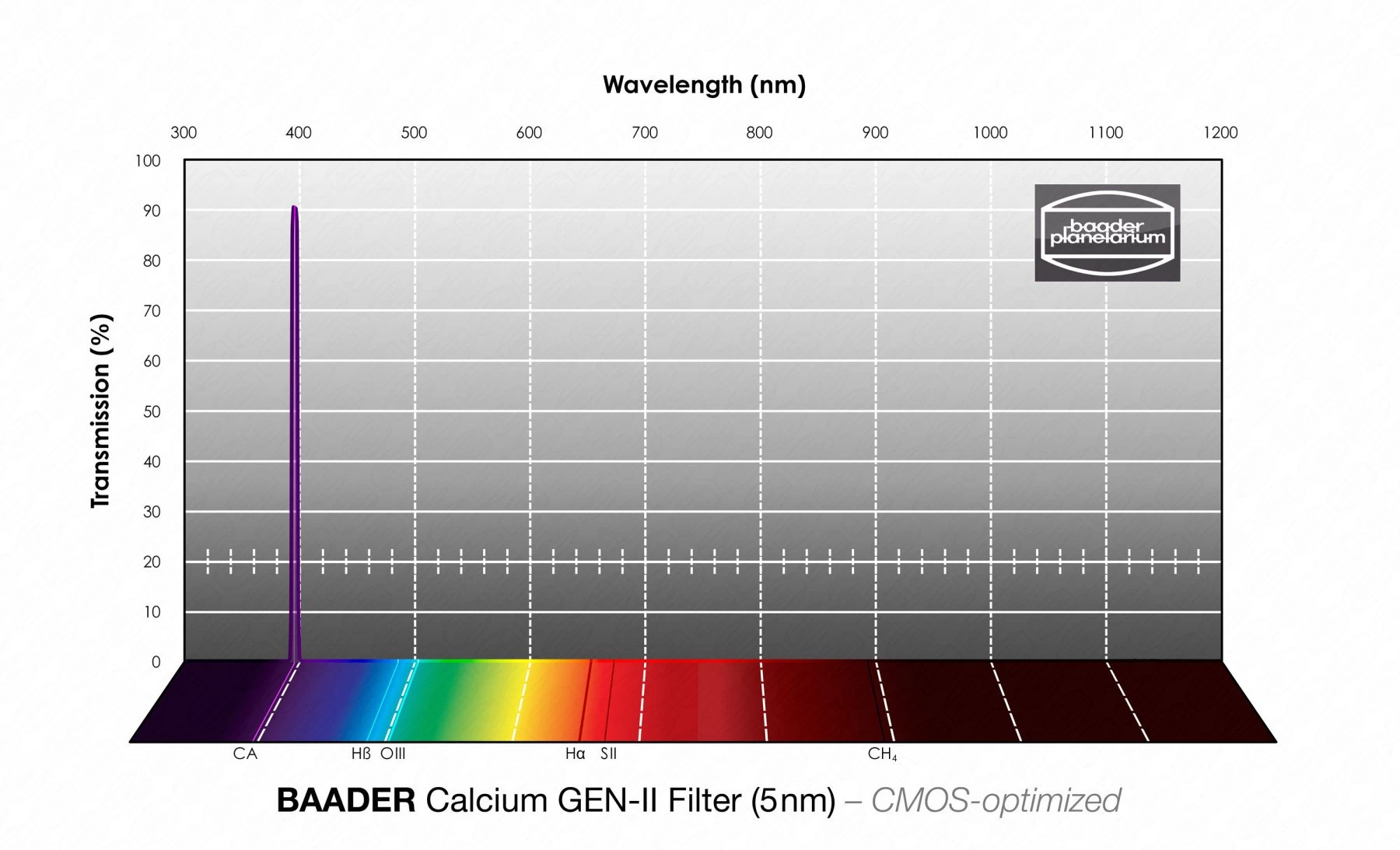
To achieve higher contrast, the manufacturer has further narrowed the filter’s transmission band, specifically optimised for CMOS cameras. The Baader Calcium Gen-II Line Filter transmits radiation only within an extremely narrow 5 nm band at 394 nm, which can only be adequately detected by CMOS sensors.
Baader’s proprietary developments are also featured in this filter, including the Reflex-Blocker™ anti-reflection coating, which prevents image degradation caused by internal reflections. The edges of the filter are also blackened to eliminate stray reflections in these areas. Long service life is ensured not only by the sealed, edge-finished construction (many other filters are simply cut from a single sheet), but also by the scratch-resistant Life-Coat™ coating. The filter substrate thickness conforms to Baader’s standard filter thickness.
The standard 1.25-inch filter can be used for eyepiece projection photography by threading it onto the telescope eyepiece, or for prime-focus imaging by fitting it to the camera nosepiece, in both cases in combination with the appropriate protective filter.
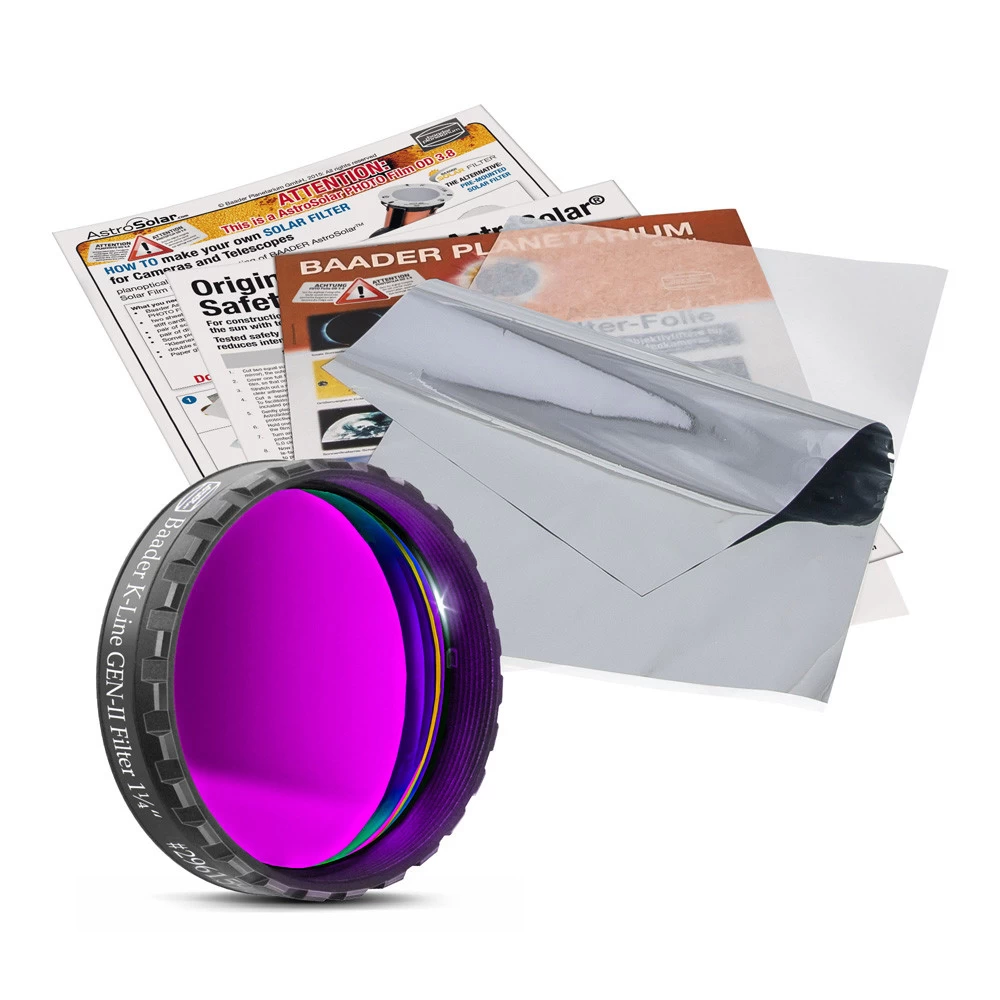
Warning! The Baader Calcium Gen-II Line Filter must only be used in combination with another solar filter! This may be the supplied Baader AstroSolar Photo Film (ND 3.8) (not suitable for visual use on its own!) or a Herschel wedge. Their function is to significantly reduce the heat coming from the Sun before the light reaches the line filter, protecting both your equipment and your eyes from damage. The Baader Calcium Gen-II Line Filter is strictly an astrophotography filter! During extended visual observation, the significant level of UV radiation may damage your eyes. Furthermore, the human eye is relatively insensitive at the low wavelength of 394 nm, so most details would not be visible visually, making visual use pointless.